Bill Shafer sent along a nice video about the resurgence of the vinyl record. Like the ebb and flow contained in the grooves of our favorite records those black discs have risen and fallen and risen again in popularity over the years. It's out lasted reel to reel tape , 8-track, cassette, DAT, and Minidisc. The way things are going it's starting to look like the record will outlast the CD too. Now wouldn't that be ironic.
Thursday, June 26, 2008


Tuesday, June 24, 2008
Kid Rock is Right?
Rarely, if ever do I agree with Kid Rock. But he makes his point very succinctly in this youtube video.
Stealing music is wrong. You heard it here first kids!
Sunday, June 22, 2008
Impending disaster at Capitol Tower

Los Angles may be close to loosing a land mark. In a city where almost nothing is old and a general sense of history is lacking, Capitol Studios is under threat. The Capitol Tower was designed by architect Welton Becket and opened in 1956 at 1730 Vine Street. A developer has purchased the land next door and intends to build a 16 floor condominium high rise, complete with underground parking. That subterranean parking would only be 18 feet away from the legendary echo chambers. The construction would make the chambers and studios unusable, at least temporarily. Of more concern is that the traffic in the garage might make them permanently useless. These are the very echo chambers and studios used on recordings by Frank Sinatra, Nat King Cole, The Beach Boys, Ray Charles, Louis Armstrong, Ella Fitzgerald and countless others.
The builders originally went to great lengths to make the studio as acoustically isolated from the surrounding as possible. The rectangular first floor that houses the studios is actually a separate structure, joined to the tower after completion. The exterior walls are 10 inch thick concrete with a 1 inch air gap separating the outer structure from the studio’s inner walls. The studio floor floats on a rubber-tiled 3 inch thick concrete slab, which itself floats on a layer of cork supported by a 6 inch concrete slab. The heating and air conditioning system use decoupled ducts, sound traps, and specialized vents. Even the ballasts for the fluorescent lights were mounted outside the studio to eliminate any source of hum. Les Paul designed the echo chambers, using similar construction methods 30 feet underground. They are capable of creating echoes that last for up to five seconds. It would be a shame if all of this hard work and good design was made obsolete so some yuppies can have a posh pad with underground parking.
For those in the LA area Capitol is encouraging people to turn out and show their support at a zoning meeting for a stay of execution. The Planning and Land Use Management, or PLUM (If only politicians would spent less time thinking up cute anachronisms and more time solving problems maybe we’d have better government.) is meeting Tuesday June 17 at 2 PM at City Hall in hearing room 350. The fate of Capitol records studios may very well be in our hands.
 .
.
The builders originally went to great lengths to make the studio as acoustically isolated from the surrounding as possible. The rectangular first floor that houses the studios is actually a separate structure, joined to the tower after completion. The exterior walls are 10 inch thick concrete with a 1 inch air gap separating the outer structure from the studio’s inner walls. The studio floor floats on a rubber-tiled 3 inch thick concrete slab, which itself floats on a layer of cork supported by a 6 inch concrete slab. The heating and air conditioning system use decoupled ducts, sound traps, and specialized vents. Even the ballasts for the fluorescent lights were mounted outside the studio to eliminate any source of hum. Les Paul designed the echo chambers, using similar construction methods 30 feet underground. They are capable of creating echoes that last for up to five seconds. It would be a shame if all of this hard work and good design was made obsolete so some yuppies can have a posh pad with underground parking.
For those in the LA area Capitol is encouraging people to turn out and show their support at a zoning meeting for a stay of execution. The Planning and Land Use Management, or PLUM (If only politicians would spent less time thinking up cute anachronisms and more time solving problems maybe we’d have better government.) is meeting Tuesday June 17 at 2 PM at City Hall in hearing room 350. The fate of Capitol records studios may very well be in our hands.
 .
.Wednesday, June 18, 2008
Pure Power
For the last couple of years PS audio has been making some of the most exciting and innovative power conditioning products on the market. In the video below PS audio's founder Paul McGowan takes us on a tour of their Power Plant Premier.
I had a Power Plant Premier in my system for a month recently. The drop in the noise floor was unbelievable. The recording that sticks most in my mind was Paul McCartney's "Unplugged." The tonal shifts in his voice as he would move his head to talk to either the audience or the band were always audible, however with the Power Plant Premier the changes were astounding. Sound staging depth was also dramatically increased throughout the album. One detail that I had never noticed before nor have I heard since was the sound of McCartney shifting his feet between songs. Micro dynamics also became much more evident.
PS audio is currently offering a free DVD entitled "Coal to Coltrane: a Brief History of Power." Anybody that is interested in high end audio should request a copy. It's full of insight and anecdotes from Wes Phillips, Michael Fremmer, Robert Harley, and many more. The documentary not only demonstrates the basic principles of electricity it also explains how and why we have the electrical system that we do today. The program isn't a fluff piece selling merely PS audio's products, in fact it rarely mentions their wares. It could easily be shown on PBS, it's that educational and historically informed.
I had a Power Plant Premier in my system for a month recently. The drop in the noise floor was unbelievable. The recording that sticks most in my mind was Paul McCartney's "Unplugged." The tonal shifts in his voice as he would move his head to talk to either the audience or the band were always audible, however with the Power Plant Premier the changes were astounding. Sound staging depth was also dramatically increased throughout the album. One detail that I had never noticed before nor have I heard since was the sound of McCartney shifting his feet between songs. Micro dynamics also became much more evident.
PS audio is currently offering a free DVD entitled "Coal to Coltrane: a Brief History of Power." Anybody that is interested in high end audio should request a copy. It's full of insight and anecdotes from Wes Phillips, Michael Fremmer, Robert Harley, and many more. The documentary not only demonstrates the basic principles of electricity it also explains how and why we have the electrical system that we do today. The program isn't a fluff piece selling merely PS audio's products, in fact it rarely mentions their wares. It could easily be shown on PBS, it's that educational and historically informed.
Saturday, June 14, 2008
Avant-garde

Avant-garde musician David Byrne, formerly of the Talking Heads sets out to prove that music is all around us by turning an abandoned building into a musical instrument. The whole space is playable by a keyboard. For whatever reason when I heard about this I knew it had to be in New York. Originally posted by boingboing.
Thursday, June 12, 2008
Grado

Wednesday, June 11, 2008
T Bone Burnett

In an interview with New York’s WNYC, Producer T Bone Burnett expounds on his dislike for the CD. "It's stepped down from tape to digital to compressed digital, so people are now listening to a Xerox of a Polaroid of a photograph of a painting." For future releases of Burnett’s projects he intends to release a CD packaged with a DVD that will include DVD-Audio and files in a number of formats including 24/96, 16/44.1, AAC, and MP3. The files will be encoded from the original master instead of the process so eloquently described by Mr. Burnett. All for the same price as a conventional CD release. Too bad it wasn’t ready for the Robert Plant & Allison Krauss release “Raising Sand.” Hopefully it will be re-released in the new format.

Thursday, June 05, 2008
A new resource


Lately I’ve been completely addicted to wikipedia, whenever something piques my curiosity it’s my go to resource for quick answers. nearly everything you’d want to know about anything is there. Any subject, that is except audio. Even the entries on companies like Mark Levinson, Dynaco, Audio Research, and McIntosh are extremely short. Then there are important companies that have no entries whatsoever.
Enter Audiophilewiki. Started in May of this year, Audiophilewiki is looking to change all of that. Right now it’s in an embryonic state but with such industry luminaries as Harry Pearson, Robert Harley, Ray Kimber, Tim de Paravicini, Michael Fremer, Paul McGowan, Ken Kessler, and EveAnna Manley the talent and the passion is certainly there. For a good list of topics that already up in some for or another click here. Now go and help make it pretty!
Enter Audiophilewiki. Started in May of this year, Audiophilewiki is looking to change all of that. Right now it’s in an embryonic state but with such industry luminaries as Harry Pearson, Robert Harley, Ray Kimber, Tim de Paravicini, Michael Fremer, Paul McGowan, Ken Kessler, and EveAnna Manley the talent and the passion is certainly there. For a good list of topics that already up in some for or another click here. Now go and help make it pretty!
Friday, May 30, 2008
Revolution!
Jim Thiel is one of the most innovative speaker designers of all time. He bases all of his designs on common sense and hard science, not marketing. Instead of coming out with a new line of speakers every three years or so, Thiel chooses to wait longer and release speakers that are revolutionary as apposed to evolutionary. The dizzying number of finish options are all well done and allow those who worry about aesthetics to have a large number of choices. They even go as far as to offer custom matching of existing wood work. Does the wife have an 18th centaury armoire that she insists be matched? No problem. Send the nice folks in Lexington Kentucky a sample and in about a week or two they will send back three samples with pricing for each.
Thiel’s newest speakers, the CS3.7 is a masterstroke. For a company whose speakers have always been very seamless owing to their time and phase coherent design the 3.7 takes it to the next level. The vanishing act that these speakers pull off is quite startling. Like all Thiel speakers they do take quite some time to break in. Many believe that the extended break in time required is related to the metal drivers and the solid core wiring used through out the line.
The new 3.7 is significantly more efficient than it’s predecessor, providing twice the output from a given amount of input power. The most technologically innovative aspect of the 3.7 is it’s midrange driver which has response all the way up to 20kHz. The traditional tweeter that lies at the center of the midrange driver is there mostly to improve dispersion. The new midrange driver’s ripples also are unique and add a great amount of structural strength, which reduces distortion. Below is an interview with Jim Thiel conducted by Ken Dawkins. He discusses many of the facets that make his new speaker a technological tour de force. Click on the picture to view the video.

Saturday, May 24, 2008
Compromise worthy of a politician

It seems that there is no end in sight when it comes to the battle of which sounds better, the CD or the record. There are those who feel that CD’s will never be able to sound like a record. There are others who ask why would anyone want them to. Then there’s Aleks Kolkowski, with an idea worthy of a politician. He offered attendees of Manchester Futuresonic 2008 Festival a 45 rpm single that was cut onto a useless CD or DVD. Even going as far as to offer people the chance to bring a WAV file of their choice. Now if only useless old laserdiscs could enjoy the same “treatment” we could have some 33 1/3s as well. Many vinylphiles will enjoy the irony, yet cringe at the thought of what playing one of these would do to an expensive phono cartridge.
Thursday, May 15, 2008
Rough Mix

The ability of music to instantly and powerfully remind us of a very specific time in our life is one of its most magical qualities. For me “Rough Mix” will always be inextricably linked to a drive between Indianapolis and Lexington Kentucky with my friend and former boss Duke. There’s nothing like a road trip with good tunes to get to know someone. He brought the album along as an evaluation tool when we were visiting the manufacturing facility of Thiel Audio. When we got back into town he lent it to me. I enjoyed it, returned it then promptly forgot all about it. Until a saw it again 8 years later, I just had to buy it.
The story began when Ronnie Lane of “The Faces” approached his friend Pete Townshend of “The Who” for a loan. Townshend declined but offers to work with Ronnie on an album instead. Initially Ronnie thought that he would produce a solo album for him but Pete had little interest in sitting behind the console. Mr. Townshend offered to do a joint album (stop your snickering DAMN IT!) and recommends Glyn Johns to produce.
Rough Mix is anything but! There are lots of layers, a virtual tapestry with everything perfectly in it’s place. For the most part it’s an intimate album with hushed, almost confessional vocals. It’s an album of quieter moments. Choosing to whisper the truth instead of scream nonsense. This is all the more surprising when one considers the number of guest musicians. None of whom try to call attention to themselves, instead they chose to contribute tastefully. Special guests include Charlie Watts of “The Rolling Stones”, Eric Clapton, John Entwistle of “The Who”, Ian Stewart sort of from “The Rolling Stones (see foot note*)”, and future Who member John “Rabbit” Bundrick.
The Pete Townshend contributions are universally strong. “My Baby Gives It Away” is mid-tempo rocker. “Misunderstood” can be said without a trace of irony to have the perfect amount of cowbell. It also contains other nice percussion touches. The harmonica also adds a nice counter point to his vocals, and what’s not to love about the chorus (“coolwalkingsmoothtalkingstraightsmokingfirestoking.”) “Street in the City” is a nice little song about the goings on during the day on an average street with a nice little string arrangement. “Heart to Hang on to” has some nice moments of vocal interplay between the pair and a nice brass interlude. “Till The Rivers All Run Dry” is just beautiful and is a great example of a cover so perfectly chosen and performed that the artist really makes it their own.
I find the Ronnie Lane contributions less moving. The sole songwriting collaboration between Lane and Townshend is an instrumental called “Rough Mix” where Eric Clapton singularly fails to do anything interesting and John “Rabbit” Bundrick upstages everyone with his performance on the organ. “Annie” has a nice sad Irish drinking ballad feel to it, which is added to by the accordion and violin. For whatever reason his song “Catmelody” sounds like an outtake from “The Rocky Horror Picture Show” intended for Meat Loaf, the sax solo really seals it too. I would add “in a bad way” to the previous sentence but I feel that it goes without saying since we‘re talking about Meat Loaf. “April Fool” really benefits from Clapton’s Dobro playing, which is a nice touch. The bonus tracks, while not essential are nice to have too. All three of the outtakes have a loose audio-vérité feel that adds to their charm.
The sound of acoustic guitars are not just strings, but the body behinds the strings and the pick against those strings. The album also has quick accurate bass, and extended shimmering cymbals. While the dynamics are not overly compressed, if they were a little more open this album would go from great for a Rock recording to exceptional for a Rock recording. The newest version of the disc is a Dual Disc that in addition to it‘s DVD-Audio layer (The DVD-A is 24/48 for surround and 24/96 for stereo. In addition it has Dolby Digital stereo and surround for backwards compatibility.) also features a short documentary. The default on the DVD-A side is multi-channel, unforgivable from the two-channel audiophile without a monitor perspective.
*He was kicked out for not being cool enough though he continued to record with them and play with them live. Maybe Mick didn’t want to split the money six ways. Sorry but I simply never pass up a chance to take a shot at Mick Jagger, even a cheap unfounded one.
The story began when Ronnie Lane of “The Faces” approached his friend Pete Townshend of “The Who” for a loan. Townshend declined but offers to work with Ronnie on an album instead. Initially Ronnie thought that he would produce a solo album for him but Pete had little interest in sitting behind the console. Mr. Townshend offered to do a joint album (stop your snickering DAMN IT!) and recommends Glyn Johns to produce.
Rough Mix is anything but! There are lots of layers, a virtual tapestry with everything perfectly in it’s place. For the most part it’s an intimate album with hushed, almost confessional vocals. It’s an album of quieter moments. Choosing to whisper the truth instead of scream nonsense. This is all the more surprising when one considers the number of guest musicians. None of whom try to call attention to themselves, instead they chose to contribute tastefully. Special guests include Charlie Watts of “The Rolling Stones”, Eric Clapton, John Entwistle of “The Who”, Ian Stewart sort of from “The Rolling Stones (see foot note*)”, and future Who member John “Rabbit” Bundrick.
The Pete Townshend contributions are universally strong. “My Baby Gives It Away” is mid-tempo rocker. “Misunderstood” can be said without a trace of irony to have the perfect amount of cowbell. It also contains other nice percussion touches. The harmonica also adds a nice counter point to his vocals, and what’s not to love about the chorus (“coolwalkingsmoothtalkingstraightsmokingfirestoking.”) “Street in the City” is a nice little song about the goings on during the day on an average street with a nice little string arrangement. “Heart to Hang on to” has some nice moments of vocal interplay between the pair and a nice brass interlude. “Till The Rivers All Run Dry” is just beautiful and is a great example of a cover so perfectly chosen and performed that the artist really makes it their own.
I find the Ronnie Lane contributions less moving. The sole songwriting collaboration between Lane and Townshend is an instrumental called “Rough Mix” where Eric Clapton singularly fails to do anything interesting and John “Rabbit” Bundrick upstages everyone with his performance on the organ. “Annie” has a nice sad Irish drinking ballad feel to it, which is added to by the accordion and violin. For whatever reason his song “Catmelody” sounds like an outtake from “The Rocky Horror Picture Show” intended for Meat Loaf, the sax solo really seals it too. I would add “in a bad way” to the previous sentence but I feel that it goes without saying since we‘re talking about Meat Loaf. “April Fool” really benefits from Clapton’s Dobro playing, which is a nice touch. The bonus tracks, while not essential are nice to have too. All three of the outtakes have a loose audio-vérité feel that adds to their charm.
The sound of acoustic guitars are not just strings, but the body behinds the strings and the pick against those strings. The album also has quick accurate bass, and extended shimmering cymbals. While the dynamics are not overly compressed, if they were a little more open this album would go from great for a Rock recording to exceptional for a Rock recording. The newest version of the disc is a Dual Disc that in addition to it‘s DVD-Audio layer (The DVD-A is 24/48 for surround and 24/96 for stereo. In addition it has Dolby Digital stereo and surround for backwards compatibility.) also features a short documentary. The default on the DVD-A side is multi-channel, unforgivable from the two-channel audiophile without a monitor perspective.
*He was kicked out for not being cool enough though he continued to record with them and play with them live. Maybe Mick didn’t want to split the money six ways. Sorry but I simply never pass up a chance to take a shot at Mick Jagger, even a cheap unfounded one.
Wednesday, May 07, 2008
Knowing your roots
Originally written December 6, 2006, now with pictures!


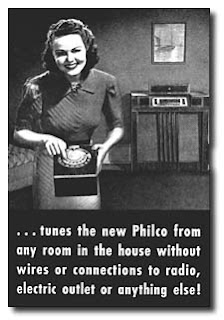


Recently I was afforded the opportunity to visit the Pavek Museum of Broadcasting in St. Louis Park, Minnesota. The museum began life as the private collection of Joseph R. Pavek. A traveling salesman that made it a regular habit to stop into every small town barber shop for a quick trim and to ask the same question, "Do you know anyone with an old radio they don’t want?"In Mr. Pavek’s day the barber knew everyone in towns business.


There were a plethora of interesting exhibits. The first that springs to mind was a musical performance that was recorded simultaneously for acoustic 78RPM record (A horn captured the sound which was then cut directly into the master. No electricity was necessary) and electrical 78RPM record (Microphones and something approaching modern recording technics.) flipping between them was a snap. Of course the electrically recorded version had much better bass response, a more transparent midrange, and more a more accurate presentation of brass instruments. The gentleman guiding the tour briefly mentioned that when electrical recordings made their debut felt that they were markedly inferior to the old acoustical recordings. Thus was born Audio Luddism.


The next exhibit that inspired my imagination was when our tour guide was nice enough to play a Bing Crosby recording on an early Ampex ¼” reel to reel tape deck using a Marantz 5B tube amp and a huge pair of Western Electric horn speakers that were originally designed for movie theater use (I would estimate that the mouth of these horns was roughly 5’ by 7’, yes I meant feet!) The sound was stunning and immediate! Apparently, Mr. Crosby was an early investor in Ampex, supporting an American GI that had brought back some German machines after World War II. He used the Ampex machines to record his radio show so that he could complete it on his schedule, not allowing himself to be a slave to the time slot.


Perhaps the most amazing item on display was a Philco radio from 1939 It featured six AM presets and a wireless RF remote, that used a rotary dial similar to what was used on telephones. The range, an astonishing 200 feet! Something that would have been amazing had it been working was a 78RPM record changer that would play one side of the disc, then flip it to play the other side automatically. Unfortunately it had malfunctioned the previous day snapping a shellac in two, just my luck.


Perhaps the most amazing item on display was a Philco radio from 1939 It featured six AM presets and a wireless RF remote, that used a rotary dial similar to what was used on telephones. The range, an astonishing 200 feet! Something that would have been amazing had it been working was a 78RPM record changer that would play one side of the disc, then flip it to play the other side automatically. Unfortunately it had malfunctioned the previous day snapping a shellac in two, just my luck.


In one of the earliest examples of decorators trying to hide audio systems as to not ruin the décor of a room was a 78RPM turntable disguised as a lamp. The shade hid the turntable, and the body of the lamp was a brass horn that emitted the music. It was also a working lamp. The sound, well let’s just say that it was the Bose of it’s time. Feel free to draw your own conclusions.
Also on display was an original Theremin utilizing all tube electronics. I was even granted permission to "play" it. That was a very cool experience. I’m no Jimmy Page, let me tell you. Another interesting tidbit was a Mechanical Television with a resolution of 48 lines (If I remember correctly.) It consisted of a spinning disc drilled with holes and an eye piece that the view looked through. Broadcasts were over AM radio frequencies and most viewers built their own "televisions."
If anyone is in the St. Louis Park, Minnesota area a visit is mandatory. My tour was courtesy of Tom Mittelstaedt who was obviously equal parts passionate and knowledgeable. The Pavek is located at 3515 Raleigh Avenue in Saint Louis Park, just east of Highway 100, off the West 36th Street exit. They are open to the public five days a week and are also available for special tours and evening meetings. Call the Museum at (952) 926-8198 to make reservations for group tours or just stop in for a visit. Their website is www.pavekmuseum.org It’s not to be missed.


Also on display was an original Theremin utilizing all tube electronics. I was even granted permission to "play" it. That was a very cool experience. I’m no Jimmy Page, let me tell you. Another interesting tidbit was a Mechanical Television with a resolution of 48 lines (If I remember correctly.) It consisted of a spinning disc drilled with holes and an eye piece that the view looked through. Broadcasts were over AM radio frequencies and most viewers built their own "televisions."
If anyone is in the St. Louis Park, Minnesota area a visit is mandatory. My tour was courtesy of Tom Mittelstaedt who was obviously equal parts passionate and knowledgeable. The Pavek is located at 3515 Raleigh Avenue in Saint Louis Park, just east of Highway 100, off the West 36th Street exit. They are open to the public five days a week and are also available for special tours and evening meetings. Call the Museum at (952) 926-8198 to make reservations for group tours or just stop in for a visit. Their website is www.pavekmuseum.org It’s not to be missed.


Saturday, May 03, 2008
As it should be

Paul McCartney-”Unplugged (The Official Bootleg.)" Unfortunately it was never released in the US so you will have to buy it as an import. It's worth it, I promise. It is not a bootleg, that’s just a tongue in cheek title. It was recorded during an MTV unplugged appearance, and released by Parlophone. The entire album is what unplugged is supposed to be, all acoustic instruments! The album preserves the witty between song banter, re-tuning of instruments, moving of microphones, etc. It’s easy to hear that everyone involved is having a great time, including the band. The audience is very respectful, yet excited. One of the most natural and engaging live albums that I have ever heard. The sound quality is extremely high. There is a minimum of compression and great sound staging depth. As Paul turns around to direct comments to the band or steps away from the mic the tonality of his voice changes. Also when he messes up the lyrics of an old Beatles song the frustration in his voice is apparent, as he apologizes to the audience. Geoff Emerick did a great job in the engineering and mixing department. The material is a mixture of old rockabilly, Beatles material, and early McCartney solo work. This album is priceless.
Friday, April 25, 2008
An open letter to John Atkinson
In his May 2008 review of Paradigm Reference Studio/20 Robert Reina states the following, “Even on “The Best of Both Worlds,” from Hannah Montana’s Dance Along DVD (Disney IFPI 7792), the Studio/20 had me following an interesting melody on distorted guitar buried under Miley Ray Cyrus’s processed, in-your-face vocal.” (May 2008 p.101) What is Mr. Reina doing with this DVD in his collection and what makes him think that this is an appropriate demo disc for a Stereophile review? This largely, if not completely undercuts his credibility and seriously threatens the credibility of Stereophile Magazine itself. John Atkinson should call for Mr. Reina’s immediate resignation, or Robert’s severed head on an mpingo disc. The disc’s harmonic tuning could turn his screams of “I Leave my 24” Celestion Si speaker stands to Sam Tellig.” into Frank Sinatra singing “I get a kick outta you.” Who at Stereophile knew that “Robert J Reina” was the nom de plume of a 15 year old girl, and when did they know it? I call for a series of Congressional hearings into the matter. The hearings are to last at least 20 months, cost $20 million dollars, produce a report of no less than 409 pages and answer no questions, find no fault, and offer no solutions. Use the Mitchell report as a blueprint and you can‘t go wrong. In addition a copy of the report must be mailed to each subscriber so we can not read it at our leisure, but discuss it as if we had. In the future Mr. Atkinson I strongly suggest that you screen applicants for reviewing jobs much more vigorously. Please cancel 1/10 of my Stereophile subscription. Not by issue count, but by removing Rob Reina reviews from issues mailed to me. Please issue my refund check for the difference in Canadian dollars.
Signed,
A reader with too much time on his hands
P.S. In all seriousness I know that everyone is trying to lose weight but the latest issue of Stereophile is positively anorexic at 150 pages. The postman slipped it under my door.
Signed,
A reader with too much time on his hands
P.S. In all seriousness I know that everyone is trying to lose weight but the latest issue of Stereophile is positively anorexic at 150 pages. The postman slipped it under my door.
Monday, April 21, 2008
Everything that's old is new again.

Tom Petty’s newest recording is a reunion of sorts with his former band Mudcrutch, which later evolved into the Heartbreakers that we all know (and some of us love.) Mudcrutch is three-fifths the same band as The Heartbreakers, both Mike Campbell and Benmont Tench were there then and are there now. Of particular interest to audiophiles the album was recorded with a no overdubs, including vocals and solos. Songs were written quickly and recorded soon after, thus maintaining their freshness and excitement. All of this will most likely add up to a do or die type of album. I can’t wait to hear what happens. From the samples up on Amazon.com it has a definite alt-country flavor. Who knows maybe this will help bring back risk and excitement by competent musicians in Rock. Mark April 29 on you calendars.
Friday, April 18, 2008
Compression and conspiracy?
The most damaging change to recorded music currently being perpetrated by the record industry is dynamic range compression. Dynamic compression is the reduction of the volume difference between the softest and the loudest passages on a recording. Record companies feel that an album or song that is consistently louder than others will “punch” through on the radio, thus increasing sales. However, other record companies are doing the same, thus it has become an arms race of sorts. The losers aren’t the record companies but us, the music buying public. We are forced to suffer music that is uninteresting and uninvolving, a relentless assault on our senses. Removing dynamic contrasts destroy the nuances in a musician’s performance, taking away one of their most important weapons to convey emotion to the listener. The following video is a powerful illustration.
Unfortunately, even older recordings are not safe. Many recent remasters of older material have been dynamically squashed too. The newest Elvis Costello greatest hits package, “The Best of Elvis Costello The First 10 years” is so “hot” it is un-listenable. His 2002 album “When I Was Cruel” is also dynamically challenged. Fortunately, his excellent 2003 album “North” was spared. Most likely because it was on the German Classical label Deutche Grammophon, thank you DG. For the most part Classical and Jazz haven’t befallen this same kind of wholesale destruction because they don’t rely on air play for sales.
If one were cynical they could see all of this as a conspiracy by the major labels to open the door to selling us “remastered” versions of all of these new releases with less dynamic compression in a couple of years time. One of the biggest cash windfalls in the history of the music business took place as consumers converted their collections from vinyl to first generation CDs. Perhaps the second largest boom in their business history was the remastering of those first generation CDs because they hadn‘t done it properly the first time. How many businesses get to make money off of their mistakes? Surely, this didn’t go unnoticed by record executives. Why sell an album on a given format once when you can sell it twice and double the company profits? If record companies really cared about their customers, they would give discounts or rebates to customers who upgraded to a new version of an album. Why not reward hard core fans of a particular band or artist, instead of penalizing them? Never mind the long term good will it would create with customers, something that they are really short on right now. Unfortunately, the small loss in short term profits would be unacceptable.
Unfortunately, even older recordings are not safe. Many recent remasters of older material have been dynamically squashed too. The newest Elvis Costello greatest hits package, “The Best of Elvis Costello The First 10 years” is so “hot” it is un-listenable. His 2002 album “When I Was Cruel” is also dynamically challenged. Fortunately, his excellent 2003 album “North” was spared. Most likely because it was on the German Classical label Deutche Grammophon, thank you DG. For the most part Classical and Jazz haven’t befallen this same kind of wholesale destruction because they don’t rely on air play for sales.
If one were cynical they could see all of this as a conspiracy by the major labels to open the door to selling us “remastered” versions of all of these new releases with less dynamic compression in a couple of years time. One of the biggest cash windfalls in the history of the music business took place as consumers converted their collections from vinyl to first generation CDs. Perhaps the second largest boom in their business history was the remastering of those first generation CDs because they hadn‘t done it properly the first time. How many businesses get to make money off of their mistakes? Surely, this didn’t go unnoticed by record executives. Why sell an album on a given format once when you can sell it twice and double the company profits? If record companies really cared about their customers, they would give discounts or rebates to customers who upgraded to a new version of an album. Why not reward hard core fans of a particular band or artist, instead of penalizing them? Never mind the long term good will it would create with customers, something that they are really short on right now. Unfortunately, the small loss in short term profits would be unacceptable.
Tuesday, April 15, 2008
To each their own

The high end hobby is undoubtedly one driven by passion bordering on obsession, as are all hobbies. Some choose to gleefully cross the line into full blown madness. Sometimes it’s hard to pinpoint the exact moment when it happens but as Supreme Court Justice Potter Stewart said of pornography, “ I can’t define it, but I know it when I see it.” If one thinks of high end audio as a flame it is inevitable that certain areas of the flame burn hotter than others. One such area is horn loaded speakers.
A gentleman in Italy has taken it further than anyone else. Below the listening room is a 3 and 1/3 foot deep series of trenches constructed in brick to form a two horns, one for the right channel and one for the left. Each horn houses eight 18” woofers. The length each horn is a little over 31 feet. The subwoofer must have been an unbelievably difficult and expensive undertaking. All of this might be over kill for a system whose sources are a Thorens TD160 turntable and a Marantz CD85 CD player, both using what appear to be rusty car springs as isolation. If you feel more information is in order click here and scroll down the page. To each their own.
A gentleman in Italy has taken it further than anyone else. Below the listening room is a 3 and 1/3 foot deep series of trenches constructed in brick to form a two horns, one for the right channel and one for the left. Each horn houses eight 18” woofers. The length each horn is a little over 31 feet. The subwoofer must have been an unbelievably difficult and expensive undertaking. All of this might be over kill for a system whose sources are a Thorens TD160 turntable and a Marantz CD85 CD player, both using what appear to be rusty car springs as isolation. If you feel more information is in order click here and scroll down the page. To each their own.
Sunday, April 13, 2008
The vinyl renaissance
Anybody who hasn't been living under a rock is well aware that vinyl is going through a renaissance . The major stumbling block to joining the fun is that many people have no idea how to properly set up a turntable. The abysmal documentation included with nearly all turntables isn't making the situation any better. Most manufacturers assume that whoever is assembling their turntable has previous experience, and thus takes a certain level of knowledge for granted.
Planet of Sound, a Canadian Hi-Fi store has made a short video explaining how to set up Project's extremely affordable Debut III.
When purchasing a new turntable a good dealer should offer to set it up for a nominal cost, if not for free. Watching how it's done and asking a few questions is never a bad idea.
Planet of Sound, a Canadian Hi-Fi store has made a short video explaining how to set up Project's extremely affordable Debut III.
When purchasing a new turntable a good dealer should offer to set it up for a nominal cost, if not for free. Watching how it's done and asking a few questions is never a bad idea.
Wednesday, April 09, 2008
Show must go on
There is an old saying in the entertainment industry, “The show must go on.” The clip below might be seen as the ultimate example of this philosophy. At a November 20, 1973 concert at the Cow Palace in San Francisco The Who’s drummer, the irrepressible Keith Moon passed out after taking a handful of horse tranquilizers (Ya, you read that right I typed “handful of horse tranquilizers.”) The amazing thing is that Pete Townshend and Company decided to continue the show using a drummer from the audience named Scott Halpin.
How many fans ever get to jam with their idols? If I were him I’d tell everyone I ever met. Something along the line of, “Hi I’m Scott, I once sat in for Keith Moon and played with The Who.” According to an interview he did with Rolling Stone, “I didn't have time to think about it and get nervous. I only played three numbers and I was dead", there energy was staggering.” After the show he got to party with the band. Luck Bastard!
How many fans ever get to jam with their idols? If I were him I’d tell everyone I ever met. Something along the line of, “Hi I’m Scott, I once sat in for Keith Moon and played with The Who.” According to an interview he did with Rolling Stone, “I didn't have time to think about it and get nervous. I only played three numbers and I was dead", there energy was staggering.” After the show he got to party with the band. Luck Bastard!
Wednesday, April 02, 2008
Finally!
It's no secret that music servers are the future of audio. Most, however are extremely expensive when the parts list is taken into account. Enter the do-it-yourself movement. Many people have an old computer laying around that is no longer in service. Augment this old machine with a bigger hard drive (either internal or external) and there is only one major obstacle, the user interface. Unfortunately many of the solutions on the market assume that there is a video display on hand or that a small display, typically the size of what is common on CD players is adequate for navigating menus from across the room. What's a two channel audiophile to do? Relax Slim Devices is confident that they have the answer. It's called a Squeezebox Duet, and it sells for an easy to swallow $399. The Squeezebox Duet puts the display were it should be, in the user's hand. Check it out.
Sunday, March 30, 2008
Origami Speakers

This afternoon I was watching Current TV which featured a profile of Muji. Think Japanese IKEA, minus the cute names. Muji's central ideas are quality, simplicity, and modesty. The product that caught my attention was a pair of single-driver speakers that use a collapsable card board box as their enclosure, retail is a cool $42. Never mind the kinds of frequency response problems that such an enclosure would introduce, I want to hear these speakers and I don't even know why. Muji just opened their first US store in New York. These would be right up the alley of Stereophile's Art Dudley. Single-driver? Check. Japanese? Check. Original in a wacky way? Check. Esoteric? CHECK!
According to Muji's website:
THE PHILOSOPHY | ||
What is MUJI? MUJI is not a brand whose value rests in the frills and "extras" it adds to its products. MUJI is simplicity - but a simplicity achieved through a complexity of thought and design. MUJI's streamlining is the result of the careful elmination and subtraction of gratuitous features and design unrelated to function. MUJI, the brand, is rational, and free of agenda, doctrine, and "isms." The MUJI concept derives from us continuously asking, "What is best from an individual's point of view?" MUJI aspires to modesty and plainness, the better to adapt and shape itself to the styles, preferences, and practices of as wide a group of people as possible. This is the single most important reason people embrace MUJI. MUJI - in its deliberate pursuit of the pure and the ordinary - achieves the extraordinary. |
Friday, March 28, 2008
Extremely early Jimmy Page
You tube is really a treasure trove of old video, most of which can not be released commercially because of copyright reasons. Below is a performance by James Page, better known as Jimmy Page (much later of Led Zeppelin) from 1957. Who knew he was a world class whistler too? I wouldn't hold my breath for a reunion of this group either.
Tuesday, March 25, 2008
Raising our profile?
All too often the high-end hobby spend lots of time and resources preaching to the choir. In some respects it’s understandable. High end manufacturers have limited resources (most employ less than 50 people) and by targeting their message towards hobbyist they guarantee some return on their investment. However, this does nothing to bring new blood into the hobby. A greater number of people involved in high quality audio reproduction is a good thing not only for audio companies, but also for consumers. As production increases the prices that companies have charge per unit to remain profitable and innovate will drop.

Recently, there have been a number of steps in the right direction. According to Steve Guttenberg’s March 11 blog Thiel audio and Bryston have teamed up to set up a system at the headquarters of Rolling Stone magazine. The system will be in place for three months and consists of Thiel 3.7 loudspeakers and SS2 Subwoofer. As well as Bryston’s BCD-1 CD player, BP26 preamp, and 28BSST mono block amps. Hopefully the writers at Rolling Stone will be so impressed that one of them will write an article about perfectionist audio, thus helping raise it’s exposure.
Another category that is helping to raise the profile of high-quality sound reproduction is the partnerships between auto manufacturers and high-end audio stalwarts. This trend began in earnest when Mark Levinson teamed with Lexus and seems to only be gaining momentum. Other partnerships include Aston Martin/Linn, Jaguar/B&W, and Bentley/Naim, Volvo/Dynaudio, BMW/Lexicon, and Bugatti/Burmester. According to Wes Philips’ excellent blog Naim has taken things a step further by setting up a listening room at the 2008 International Auto Show.
Last, but certainly not least American Express has given the industry some unbelievable free publicity with their Plum card advertisement that features music direct, a highly regarded mail order audio retailer on their TV commercials. Jason Victor Serinus wrote a great post on Stereophile's webpage about how this commercial came about.
Monday, March 10, 2008
Going Home Again
 On the Cowboy Junkies newest album, "Trinity Revisited" they celebrate the 20th anniversary of their landmark 1988 album "The Trinity Sessions." Even going as far as returning to Toronto's Church of the Holy Trinity, the sight of the original recording. At first blush this sounds like possibly the worst idea of their career. The original is a certified classic, whatever they did with it they were bound to ruffle lots of feathers.
With such an endeavor there were two courses that were the obvious ones. First they could try to meticulously duplicate the original. But what’s the point in that, lightning never strikes in the same place twice in exactly the same way. The second clear path would be to do something completely different with the same batch of songs. Of course with so many listeners that love the music this could also make the Cowboys the victims of a lynching.
The Junkies chose a third, less clear path. To stay true to the original spirit, while breaking new ground with the arrangements. Along for the ride are some impressive guest musicians. Again, Cowboy Junkies avoid the pitfall of just picking current “hot” musicians. Instead they find sympathetic souls that understand the original masterwork, but aren’t afraid of it. It’s impossible to imagine a better supporting cast than Ryan Adams, Vic Chesnutt, Natalie Merchant, and Jeff Bird (whose a given.) Gone is the minimalist miking of the original. The sound isn’t as spacious as the original but the tonality of the individual instruments, particularly the vocals is arguably more accurate.
Overall the guests are used to good effect. Everyone is perfect in their rolls. While it wasn’t rehearsed and recorded in one day, like it’s inspiration the pace was still breakneck. One day for technical set up (lighting, cameras, sound) the second day for rehearsals, and a third for the performances. This surely helps keep things fresh, fun, and just a little dangerous.
The set comes not only with a CD, but also a DVD. Production of both is first rate. The video was shot 1080, at 24 frames per second (actually 23.976 if you want to be specific about it.) and the audio was recorded at 24/96, so they’ve prepared for the future as well as making a great looking and sounding package for today. The DVD defaults to the PCM stereo track, handy for those who want to listen to the 24/96 track of the DVD but either don’t have a monitor to navigate menus, or simply don’t want to turn it on. Someone was thinking. Bravo! Also contained on the DVD is a documentary covering both the making of the original and the updated version which runs about 30 minutes, as well as the band’s early “creative” touring methods.
Not only has the new version been played numerous times, but it’s mandated more listenings to the original. There is no higher praise than that.
Saturday, December 22, 2007
Touching
Below is a clip of Robert Plant paying tribute to Jimmy Page. Here I am completely ready to write Robert off as a completely selfish, pompous ass and then he does something like this. It chocked me up a bit.
An unexpected twist
For those of you who haven't heard Robert Plant (of Led Zeppelin fame) and Alison Krauss (a famous blue grass singer) have done an album together. Robert's motto has always been, "ever onward" which has earned him my respect. After Zeppelin he could have easily cashed in on the success by sticking with what he knew, but he decided to take risks. Some albums have been better than others but none of them have sounded the same.
Monday, December 03, 2007
Getting music OFF an iPod
On of the major problems of using Apple lossless files or WAVE files is their substantially larger size compared to MP3 or smaller AAC files. While encoding music to an iPod it may be common to run out of space on the internal hard drive of a the computer. Sometimes buying a bigger hard drive isn’t possible. When this occurs one option would be to change iTunes preferences so that music could be deleted off of the computer’s hard drive without being removed from the iPod. This would be a fine solution for music that the user would never want to remove from the iPod. However, if the user ever needs these music files again having to re-encode them every time they are needed would be a painful process. Apple could easily allow music to be moved back from the iPod to iTunes. This would naturally make record company executives concerned with music piracy less interested in licensing their content to the iTunes store. Therefore Apple has been forced to disabled this ability. There are a number of third party products that will allow the user to copy files from their iPods back into iTunes. EphPod is one such product, and it happens to be free.
Monday, November 19, 2007
DIY music server
Recently I've been thinking a lot about building my own music server. With my recent purchase of a Hitachi H31000U 1 TB hard drive for the bargain price of $199 , I'm one step closer. This weekend I tried the PS Audio Digital Link III DAC which has a USB digital input. The PS Audio offers the ability to upsample the digital data to 96kHz or 192kHz. When upsampling the USB input to 192 kHz every couple of minutes there was a strange occurrence. There was a temporary drop in volume and a very slight interruption of the music, which lasted fractions of a second. Switching the unit to 96kHz solved this issue but also didn't offer quite the same sound quality.
A shootout between the PS audio and my current DAC, the Theta DSP Pro Basic III ended with the Theta coming out on top. So now the HagUsb from Hagerman Tehnology looks will be how I get my current DAC digital information from my future server project. At between $119 to $139 depending on whether one chooses the SPIDF or the AES/EBU, it seems like a bargain. Add to the affordable price a 30 trial period is it seems like a great opportunity. Of course the ideal solution would be a sound card that would have a digital output, however nearly all of those are toslink which is unacceptable for high end applications.
My current vision for the finished music server would be using a Windows XP based PC using iTunes playing WAV files. Apple lossless probably won't be used because even though the files are smaller and there is a mountain of evidence that they have the exact same data as a WAV file after being uncompressed it is a proprietary. If I change to other programs or buy a server a couple of years from now I don't want to have to re burn my music collection. Foobar2000 as an organizational interface also seems popular some more research into that might be warranted. Many use Exact Audio Copy to import music so some reading on that is also probably in order.
Getting better sound from a computer running Windows XP using iTunes is easier than you think. The following changes in total caused a profound increase in sound quality of the 1/8th inch analog out jack of my lap top. Windows XP Setting changes:
After right clicking on the volume control in the tool bar make sure that the “wave” volume control is at maximum and that the balance is in the middle. Both setting are implemented in the digital domain degrade the sound if used. Volume is reduced by reducing the resolution. 1bit of resolution is lost for every 6db of attenuation applied with a digital volume control. Also make sure that you press the advanced button and un click the “1 mic boost” setting. It raised the noise floor dramatically. Going into the “Sound Effect Manage” via the control pannel and making sure that there isn’t any EQ being done there is also advisable. On the “S/PDIF-Out” tab change the sampling rate from 48KHz to 44.1KHz. The bit conversion done by this setting when it is at the 48KHz setting destroys the sense of space as well as reducing tonality in the bass and destroying micro dynamics.
To stop windows sounds from interrupting the music go to the control panel select “Sound and Audio Devices” then to the “Sounds” tab. Under “Sound schemes select “No Sounds” and press the “Apply” and “Ok” buttons.
Changes in iTunes:
If iTunes is the player that will be used to interface with the music library make sure to turn the “Sound Enhancer” and “Sound Check” features off. “Sound Enhancer” boosts the high frequencies and also exaggerates left/right separation. Thus if we want a true representation of the audio this box should be unchecked. The “Sound Enhancer” does nothing more than add dynamic compression in an attempt to reduce the volume difference between songs when in random mode. It goes without saying that compressing dynamics changes the sound and is therefore inherently less accurate, hence undesirable. To turn these features off go to the “Edit” tab, select “Preferences”, then the “Playback tab and make sure that both the “Sound Enhancer” and “Sound Check” boxes are not checked. Also make sure that the volume on iTunes is set to it’s maximum setting because again this is another digital volume control that reduces volume by reducing resolution.
A shootout between the PS audio and my current DAC, the Theta DSP Pro Basic III ended with the Theta coming out on top. So now the HagUsb from Hagerman Tehnology looks will be how I get my current DAC digital information from my future server project. At between $119 to $139 depending on whether one chooses the SPIDF or the AES/EBU, it seems like a bargain. Add to the affordable price a 30 trial period is it seems like a great opportunity. Of course the ideal solution would be a sound card that would have a digital output, however nearly all of those are toslink which is unacceptable for high end applications.
My current vision for the finished music server would be using a Windows XP based PC using iTunes playing WAV files. Apple lossless probably won't be used because even though the files are smaller and there is a mountain of evidence that they have the exact same data as a WAV file after being uncompressed it is a proprietary. If I change to other programs or buy a server a couple of years from now I don't want to have to re burn my music collection. Foobar2000 as an organizational interface also seems popular some more research into that might be warranted. Many use Exact Audio Copy to import music so some reading on that is also probably in order.
Getting better sound from a computer running Windows XP using iTunes is easier than you think. The following changes in total caused a profound increase in sound quality of the 1/8th inch analog out jack of my lap top. Windows XP Setting changes:
After right clicking on the volume control in the tool bar make sure that the “wave” volume control is at maximum and that the balance is in the middle. Both setting are implemented in the digital domain degrade the sound if used. Volume is reduced by reducing the resolution. 1bit of resolution is lost for every 6db of attenuation applied with a digital volume control. Also make sure that you press the advanced button and un click the “1 mic boost” setting. It raised the noise floor dramatically. Going into the “Sound Effect Manage” via the control pannel and making sure that there isn’t any EQ being done there is also advisable. On the “S/PDIF-Out” tab change the sampling rate from 48KHz to 44.1KHz. The bit conversion done by this setting when it is at the 48KHz setting destroys the sense of space as well as reducing tonality in the bass and destroying micro dynamics.
To stop windows sounds from interrupting the music go to the control panel select “Sound and Audio Devices” then to the “Sounds” tab. Under “Sound schemes select “No Sounds” and press the “Apply” and “Ok” buttons.
Changes in iTunes:
If iTunes is the player that will be used to interface with the music library make sure to turn the “Sound Enhancer” and “Sound Check” features off. “Sound Enhancer” boosts the high frequencies and also exaggerates left/right separation. Thus if we want a true representation of the audio this box should be unchecked. The “Sound Enhancer” does nothing more than add dynamic compression in an attempt to reduce the volume difference between songs when in random mode. It goes without saying that compressing dynamics changes the sound and is therefore inherently less accurate, hence undesirable. To turn these features off go to the “Edit” tab, select “Preferences”, then the “Playback tab and make sure that both the “Sound Enhancer” and “Sound Check” boxes are not checked. Also make sure that the volume on iTunes is set to it’s maximum setting because again this is another digital volume control that reduces volume by reducing resolution.
Thursday, November 08, 2007
Treating music with repect
The debate of digital vs. analog still rages on. I’m pretty much neutral. Either can be very, very good if done well, though they rarely are even done adequately. Instead of worrying about whether something is digital or analog let’s start demanding better quality of both. I’ve been fortunate enough to hear direct dubs to CD off of analog master tapes and they kill what is available to us on commercial CD’s.
I believe that one of the most damaging changes to music that is perpetrated by the record industry is dynamic compression. Dynamic compression is the reduction of the volume difference between the loudest and the softest sounds on a recording. Record companies feel that an album or song that is consistently louder will “punch” through other songs on the radio, thus increasing sales. However, other record companies are doing the same, thus it has become an arms race of sorts. The losers of this arms race aren’t the record companies but us, the music buying public. We are forced to suffer music that is uninteresting and uninvolving to listen to, a relentless assault on our senses. Removing dynamics can destroy the nuances is the tone or volume of a singer’s performance, taking away one of the tools in their arsenal to convey emotion to the listener. This removal of nuance also affects every other musical instrument. For the most part Classical and Jazz haven’t befallen this same fate as they don’t rely on air play for sales.
However, we the consumer are not blameless in all of this. Not only do we buy these flawed recordings, many of us do further damage by knowingly or unknowingly digitally compressing the music when we add them to our portable music players. This compression is a different, but far more insidious manipulation. Instead of reducing detail it is obliterated. Information that is judged to be “inaudible” or “unimportant” is simply disguarded in an effort to save space. In effect, many are saying that they are will to sacrifice quality for an increase in quantity.
Unfortunately, Apple is contributing to this wholesale reduction in quality. The iPod isn’t the problem, it’s a tool that can either be used or misused. However the iTunes store sells music at one of the lowest bit rates possible, setting the bar disappointingly low. The iTunes software is also complicit in the affront to music lovers. Out of the box the setting to the software is optimized to maximize storage space, effectively minimizing sound quality. Changing these settings is fairly straight forward. Go to the “Edit” pull down menu, then select “Preferences” from there go to “Advanced” tab and select the “Importing” tab and select either the “Apple Lossless encoder” or “Wav.” Wav is an exact bit for bit copy of the CD. To reduce the space of the files but without losing sound quality select the “Apple Lossless encoder.” It is purported to reduce the file size by half without a loss in sound quality. In practice the new file is slightly larger than half, but tests have shown that when uncompressed for playback it is in fact bit perfect. The only down side of apple lossless files is that they can only be played by iTunes and iPods.
Thursday, May 31, 2007
To the Extreme
Many audiophiles lovingly tweak their prized audio systems. To the layman many of these adjustments may seem a bit extreme. I'm pretty open minded when it comes to trying the newest hot tweak. But the owner of this system was so completely out of tweaking ideas he took a decidedly spiritual turn. Note the Buddha between the speakers.

Hey, whatever works.
Subscribe to:
Posts (Atom)