Showing posts with label tweak. Show all posts

Saturday, May 09, 2009

The Furutech Furor


The Furutech deMag device has been causing controversy in high-end circles for some time now, Stephen Mejias' excellent blog entry reignited debate on the Stereophile forum. It's main purpose is to de-magnetize vinyl records although there are reports of people using it on interconnects, speaker cables, power cords, even CD's; all with positive results. According to the manufacturer while vinyl is not magnetic carbon black, the material used to make records black does exhibit some magnetic properties.


I'd like to thank Michael Fremer for posting the files for comparison sake. Not only does it let us look at (although in a flawed manner) what the Furtech demag device does or does not do, it also lets us all get a glimpse at how special Mickey's turntable is. The digital recordings were made using a Continuum Audio Labs Caliburn turntable, Cobra tonearm, Castellon stand and "probably Manley Steelhead, Lyra Titan i cartridge" as the analog front end according to Michael Fremer.

Right after the downloads were complete I listened to the two samples using the computer as the source through my Tivoli Model One table radio, just for fun. Even on the Model One after the first listen I thought I heard a difference. It was so small as to be indescribable, but "Step Right Up 2" was just a little more alive. From there I burned it to a CD-R and put it on my system.

There are two things that are important to mention. First, this is a digital conversion of an analog medium so some of the differences are bound to have gotten lost in that conversion. That seems obvious, but it's still worth mentioning none the less. Second, while my system is very, very good most likely it's not nearly as resolving as Michael Fremer's system.

Alright, on to my conclusions.

All comparisons were done over the course of a number of days. "Step Right Up 2" consistently bested "Step Right Up 1" in the following ways:
  1. The bass is more articulate and has a more complex tonal structure.
  2. The Scatting and the finger snaps at the beginning of the song are much more prominent.
  3. There is greater soundstaging depth and space in general.
  4. The sax sounds at once further back in the soundstage AND less veiled.
  5. The performance is more involving with a greater sense of micro dynamics, especially in the nuances of Tom Waits vocal delivery.
Were the differences HUGE? Not on my system but as previously mentioned the scale of those changes were probably reduced by the conversion process itself and the system that I'm using is several steps below the one that Michael is blessed with. However, I'm confident those differences are real. For someone with a ultra high end vinyl set up looking to add those last few drops of resolution the Furutech DeMag might just be the ticket.

Wednesday, April 29, 2009

Myrtle Wood Blocks


Many after market component support tweaks are manufactured from man-made materials and are made to extremely tight tolerances which results in a uniform "tuning" frequency. The uniformity usually adds some distinctly negative coloration in addition to the products sonic benefits. That doesn't occur with the wood blocks. Since the blocks are a natural material every sample is going to differ a bit. That might, in fact be part of why they work so well. Each block works on slightly different set frequencies because of variations in the grain structure and density of the wood.

During my time at an Ayre dealer I sold hundreds of sets of the wood blocks and told everyone the same thing, "If you don't hear a difference please bring them back." I can't speak for Cardas but Ayre is very picky about who their dealers are from a customer service stand point. If someone purchases a set and DOESN'T hear a difference I'm sure any Ayre dealer would let the customer return them for a full refund. I only had one set come back in over three years and that was because the guy owned Halcro gear and the standard feet were too tall to allow their use. I once sold a set to a hard core skeptic non-tweaker because his wife demanded that the system fit into an armoire and the CD player was blocking the top vents of his hot running preamp. When I told him that in addition to allowing the preamp to breath it would make the CD player sound better he gave me a complete "FUCK YOU" look. Three days later he called me back and bought three more sets for the other components because he had heard a difference even though he didn't want to.

The Ayre wood blocks in my system are used in sets of three because three points define a plane, with the logo right side up. Not to name drop but Charlie Hansen and Steve Sliberman of Ayre also feel it to be the best sounding orientation so I'm in good company. When I worked for an Ayre dealer Steve would only reveal his conclusions after I had done the experiments myself, they encourage people to "play" with the blocks. I do not believe that the benefit of the Ayre/Cardas myrtle blocks is in their resonant behavior ADDING a pleasurable element to the sound. I believe that the mechanism is the DRAINING of resonances AWAY from the component and into the equipment rack. I always place one block under the power supply of the component because that's usually the biggest source of vibration in components other than CD players and turntables.

Whenever possible the Myrtle wood blocks are placed against the side of a protruding screw, bolt, etc on the bottom cover because these fasteners are the best mechanically conductive pathways for vibrations. The amount of change in the sound just by making sure that they made contact with a fastener of some type was an ear opener. I found that chestnut of thinking while reading about Symposium products after Stephen Scharf's thread on DIY roller blocks had piqued my interest. The acoustic impedance of the wood blocks is much more similar to the metal (Myrtle wood being extremely hard) of the component bottom AND the wood of the rack shelves than the stock rubber feet offered on most products, thus it drain the vibrations away much more quickly and efficiently. I will admit that according to this theory the ideal situation would be to have metal shelves and metal footer, all made for more or less the same metal. Maybe Cardas should make some of these blocks, with the same dimensions in metal too. Why don't these blocks allow outside vibrations into a component as well as drain internal resonances away? I'm don't have a good answer to that question, but I assure you that I have thought about it.

Monday, February 16, 2009

Have you heard the buzz?


If there is hum or buzz in your audio system diagnosing the cause is often a frustrating task. Begin by asking yourself some questions. Is the hum at 60Hz? If you have a test CD that has a 60Hz tone use that as a reference for comparison. If yes you are certainly dealing with an electrical issue.

If it's only on your phono input. How close is it to other equipment? One thing to always keep in mind is that the signals that phono preamps are dealing with are absolutely tiny. Much smaller than the line out of a CD player for example, about a tenth the size. The wiring in a tone arm and the interconnects that come from the turntable are likewise vulnerable. I ran out of rack space and instead of stacking my phono pre on top of or behind something I placed it on an adjacent book shelf which did two things. First, it made sure that the unit wasn’t close to the power supplies of other components. Second, it kept the interconnects from the ’table to the phono stage away from all of the other cables in the system. You might also try turning off Digital components when listening to the analog front end because they put out a lot of RFI and EMI.

Hum is normally caused by different grounding potentials. Many times it’s because a video monitor that is connected to cable TV is also connected to an audio system. Is your system connected to a video source? The Cable and satellite Companies are required to ground THEIR system and of course the electrical system has it’s own ground already. This, of course leads to the possibility of two different grounding potentials. Electricity, like water flows to the path of least resistance and that is what causes the hum. Another thing to think of with old wiring is that you might have grounded outlets that aren’t properly grounded because the original wiring job is two wires (hot and neutral) and the conversion wasn’t done properly. This can be tested by a $5 tester that can be purchased at any hardware store. It plugs into the outlet and through a series of lights can diagnose bad grounds, hot/neutral swaps, and a number of other conditions. It’s a small price to pay for piece of mind

Are the audio outputs of TV, Cable box, or the DVD player hooked up to the audio system? If so the audio cable's ground is introducing the second ground. As a diagnostic step try disconnecting the coaxial cable that carries the TV signal that goes from the wall into the cable box. If the hum goes away then we know that the hum was caused by having two grounds with different potential.

If the ground is the problem try:


Xantech 634-00-This one is only about $9 but it tends to knock out higher TV stations in digital cable systems and negatively affect pay-per-view and movie on demand capabilities. It's cheap enough to try and throw away if it doesn't work. But in my experience it usually causes some kind of problem. I only mention it to present all options.

Mondial Magic Box-It's about $100. Which is expensive by comparison but because of it's greater bandwidth tends not to knock out higher TV stations in digital cable systems. Nor does it usually cause problems with pay-per-view and on demand functions.

Tributaries used to make one but it doesn't look like it's available any more. It worked as well as the Mondial.

Thursday, July 03, 2008

A good deal for skeptics

It would be hard to find a topic more controversial and debated in high end audio today than the effect (or lack there of) of power cords on sound. The discussion of the contribution of power cords to the overall sound of a system has been discussed many times on this blog. When I first started my forays into this phenomena I didn't want to hear a difference, because I'm cheap and I'm a natural skeptic. However, my brand of skepticism is more of an “open-minded skepticism” so investigation was clearly in order. For those looking for an inexpensive way to do some experimenting HCM audio has a closeout deal on Audioquest AC15 power cords at an unbelievable price, $39.95 for a seven and a half feet power cord. As a bonus, they are fitted with WattGate/Marinco 5266, ends. Much nicer than what Audioquest originally offered as the standard terminations.


The AC15s includes a ferrite bead to help stop RFI and EMI from getting into the components. They will be replacing the Monser PowerLine300 on my Martin Logan CLS speakers. Audioquest has been my cable of choice for a number of years now. In addition to being one of the oldest cable companies in existence, they always make clear what makes one level of cable better than the next. Their staff is more than willing to make custom cables to any specifications and to complete and ship them extremely quickly. Take a couple minutes and read this short interview with Audioquest founder Bill Low.

Thursday, May 31, 2007

To the Extreme

Many audiophiles lovingly tweak their prized audio systems. To the layman many of these adjustments may seem a bit extreme. I'm pretty open minded when it comes to trying the newest hot tweak. But the owner of this system was so completely out of tweaking ideas he took a decidedly spiritual turn. Note the Buddha between the speakers.

Hey, whatever works.

Wednesday, January 17, 2007

I do believe a little housekeeping is in order.

Lately my system has started to sound a bit dull on the top end, dynamics had become a bit lacking, a bit slow, and the bass a bit tubby. I was having to turn the system up louder than usual to get it to spring to life. This is particularly odd because one of the strengths of my system is that it usually performs equally well regardless of volume. After trying a couple of other things to clean up the sound of the system it dawned on me that the Martin Logan CLS speakers hadn't been vacuumed in months. The head of Martin Logan's service department recommends that the electrostatic panels of ALL of their models be vacuumed roughly twice a year. Being a bit of an obsessive compulsive audio geek it usually gets done monthly. The past couple of months it hasn't gotten done. WOW, a quick vacuuming of these speakers does work wonders! The bass is again articulate, with great pitch definition. Drums have regained their dynamic snap. The high frequencies have also come out to play as well. The detail in tambourines is remarkable.


The vacuum that I use for this purpose (Yes I use a specific vacuum, sue me) is very similar to one that Target is offering on line. Click on the picture if you are interested in purchasing one. It is extremely affordable at less than $30. For electrostatic speaker owners this very well might be the best $30 tweak out there.

Monday, November 27, 2006

Clarifying the situation


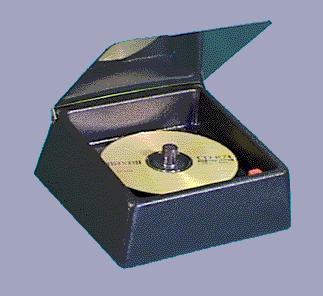
I often tell friends and fellow audiophiles that I consider myself to be an open minded skeptic. I approach all new tweaks with a certain amount of skepticism but also with the view that it is possible that they do make a difference. The Bedini Dual Beam Clarifier was no different. Bedini’s contention is that the polymers of the CD hold a static electric charge. These static electric charges on the disc surface make it harder for the laser of a CD player to read the data, forcing the CD player to employ more error correction. Bedini suggests that both sides of the disc be treated for best results.

Before discussing the results a brief discussion on methodology is in order. There are a number of discs in my collection of which I have doubles. I chose discs where both copies had been purchased extremely close together with respect to time and also chose title that had small production runs. Thus minimizing the chance that they came from different production runs, or even entirely different production plants. I listened to them and the better sounding of the two (There always was one.) became the control disc (the one which would not be clarified) this put the Clarifier at a slight disadvantage. Then the worse sounding of the discs would have both sides of the disc clarified. It is well established that when presented with a choice between “A” and “B” people will have a slight natural tendency to chose “B” when things are close. In order to combat this bias I settled on an “A”-”B”-”A” format with “A” being the un clarified disc and “B” being the clarified disc. So that switches could be done as quickly as possible I clarified the “B” disc before starting to play “A.” While “B” was waiting to be played it was set on a ceramic coffee mug data side up, not in the CD case. The reason for this was that I felt that there was a possibility that the plastic in the case might affect the CD adversely, reintroducing the static charge that the Bedini was designed to remove. Ceramic is considered to be a great insulator and was therefore ideal for the task.

The first disc up was Ron Geesin/Roger Waters-”Music From The Body”, a soundtrack for a documentary on the workings of the human body. The last track on the disc, “Give Birth To A Smile” has guest musicians David Gilmour, Richard Wright, and Nick Mason in addition to Roger Waters. This makes it a Pink Floyd track as far as I’m concerned. The clarified CD had more impact to the bass guitar. The sibilance of Roger Waters vocals were also much more natural on the clarified disc. As the song fades out the female back up singers sing the chorus “Give Birth To A Smile.” On the un clarified disc the song ends on the word “birth” whereas on the clarified disc the listener could clearly hear “to.”

Next up was “Candy Coated Valentine” from Robinella and the CC Stringband’s self titled debut. On the non clarified disc the bass sounded thick and congested and the mandolin lacked a certain pluckiness and body. At the end of the number there is also some type of creaking (A chair maybe?) which is completely inaudible on the on the non clarified disc. The clarification process also gave a greater sense of sound staging depth to the performance. In particular the vocals and the instruments had better separation. The clarified disc also had more rhythmic dive in the bass.

The last track on the formal investigation was Robert Plant’s “All The King’s Horses” from his album “Mighty Rearranger” Again sibilance was much more clean on the clarified disc compared to it’s non clarified counterpart. On the non clarified disc an oddity occurs in the chorus when Robert Plant double tracks his vocals in order to sing harmony with himself. For whatever reason his vocals pull very slightly to the left of center. This does not occur on the clarified disc. There were some subtle electric guitar parts that became much easier to follow with the clarified CD. Again on this selection the vocals seem better separated from the instrumentation.

The Bedini consistently increases the separation between the vocals and backing instruments on every CD that I clarified. The Dual Beam also removed unwanted sibilance on all clarified CDs. Cymbals also just sound more metallic and had more shimmer around them, but this was by no means extra brightness. Many CDs that had always sounded a bit bright went through the Clarifier and were better for it. For what ever reason CDs that were from Columbia Record Club benefited disproportionately from being treated. Sheryl Crow’s “Tuesday Night Music Club” is a prime example of the Columbia phenomena . It’s a personal favorite that was sounding a bit flat, compressed, and digital lately. I had been thinking of buying a proper (non record club) copy now that may not be necessary. Whether this was because of some inherent flaw in their manufacturing process or because they are some of the oldest disc in my collection it is impossible to say. Although I may investigate this further in the future.