Monday, November 27, 2006

Clarifying the situation


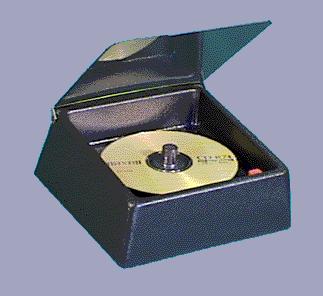
I often tell friends and fellow audiophiles that I consider myself to be an open minded skeptic. I approach all new tweaks with a certain amount of skepticism but also with the view that it is possible that they do make a difference. The Bedini Dual Beam Clarifier was no different. Bedini’s contention is that the polymers of the CD hold a static electric charge. These static electric charges on the disc surface make it harder for the laser of a CD player to read the data, forcing the CD player to employ more error correction. Bedini suggests that both sides of the disc be treated for best results.

Before discussing the results a brief discussion on methodology is in order. There are a number of discs in my collection of which I have doubles. I chose discs where both copies had been purchased extremely close together with respect to time and also chose title that had small production runs. Thus minimizing the chance that they came from different production runs, or even entirely different production plants. I listened to them and the better sounding of the two (There always was one.) became the control disc (the one which would not be clarified) this put the Clarifier at a slight disadvantage. Then the worse sounding of the discs would have both sides of the disc clarified. It is well established that when presented with a choice between “A” and “B” people will have a slight natural tendency to chose “B” when things are close. In order to combat this bias I settled on an “A”-”B”-”A” format with “A” being the un clarified disc and “B” being the clarified disc. So that switches could be done as quickly as possible I clarified the “B” disc before starting to play “A.” While “B” was waiting to be played it was set on a ceramic coffee mug data side up, not in the CD case. The reason for this was that I felt that there was a possibility that the plastic in the case might affect the CD adversely, reintroducing the static charge that the Bedini was designed to remove. Ceramic is considered to be a great insulator and was therefore ideal for the task.

The first disc up was Ron Geesin/Roger Waters-”Music From The Body”, a soundtrack for a documentary on the workings of the human body. The last track on the disc, “Give Birth To A Smile” has guest musicians David Gilmour, Richard Wright, and Nick Mason in addition to Roger Waters. This makes it a Pink Floyd track as far as I’m concerned. The clarified CD had more impact to the bass guitar. The sibilance of Roger Waters vocals were also much more natural on the clarified disc. As the song fades out the female back up singers sing the chorus “Give Birth To A Smile.” On the un clarified disc the song ends on the word “birth” whereas on the clarified disc the listener could clearly hear “to.”

Next up was “Candy Coated Valentine” from Robinella and the CC Stringband’s self titled debut. On the non clarified disc the bass sounded thick and congested and the mandolin lacked a certain pluckiness and body. At the end of the number there is also some type of creaking (A chair maybe?) which is completely inaudible on the on the non clarified disc. The clarification process also gave a greater sense of sound staging depth to the performance. In particular the vocals and the instruments had better separation. The clarified disc also had more rhythmic dive in the bass.

The last track on the formal investigation was Robert Plant’s “All The King’s Horses” from his album “Mighty Rearranger” Again sibilance was much more clean on the clarified disc compared to it’s non clarified counterpart. On the non clarified disc an oddity occurs in the chorus when Robert Plant double tracks his vocals in order to sing harmony with himself. For whatever reason his vocals pull very slightly to the left of center. This does not occur on the clarified disc. There were some subtle electric guitar parts that became much easier to follow with the clarified CD. Again on this selection the vocals seem better separated from the instrumentation.

The Bedini consistently increases the separation between the vocals and backing instruments on every CD that I clarified. The Dual Beam also removed unwanted sibilance on all clarified CDs. Cymbals also just sound more metallic and had more shimmer around them, but this was by no means extra brightness. Many CDs that had always sounded a bit bright went through the Clarifier and were better for it. For what ever reason CDs that were from Columbia Record Club benefited disproportionately from being treated. Sheryl Crow’s “Tuesday Night Music Club” is a prime example of the Columbia phenomena . It’s a personal favorite that was sounding a bit flat, compressed, and digital lately. I had been thinking of buying a proper (non record club) copy now that may not be necessary. Whether this was because of some inherent flaw in their manufacturing process or because they are some of the oldest disc in my collection it is impossible to say. Although I may investigate this further in the future.

Friday, November 10, 2006

Absolute Power!

I finally got around to changing out the power cords on my DAC, Transport, Preamp, Amp, and Power conditioner. I went with the Transparent Power Link Plus. For a brief moment I tried to kid myself that I’d be happy with the High Performance Power Link cords also from Transparent. This was mostly because they were less than half the price, but the performance gap between the PLP’s and the HPPL’s is undeniable.

The breaking in of power cords seems to occur much faster than interconnects and speaker cable. Perhaps a major contributing factor is that I leave all the components in the system on at all times. Out of the box with zero break-in they edged out the stock cords. After about three hours the difference was more audible than that. After a number of days of beak in it began to sound as if there was a bottle neck in the sound of my system. The obvious culprit was the new power cords. Quickly a theory emerged that the power cords on the amp and power conditioner must be breaking in faster than the cords used on the other components because they had so much more electricity flowing through them. So I removed those two cords and switched them with the cords on the DAC and Transport. The system’s performance improved in some areas and slightly worsened in others for a net gain. After a night of the power cords that had previously been hooked up to the DAC and Transport being burned in on the Power Conditioner and the Amp it was a different story. The new level of accuracy of timbre that the system is exhibiting is startling.

Preliminary results indicate an elimination of a certain hardness that could inhabit the midrange of female vocals. Bass has more tonality and more body, yet is still tight and articulate. Cymbals have taken on a more metallic quality and the subtle differences between different cymbals are much more easily recognized. Gone is the slightly whitish coloration that had overlaid them in the past. There is an increase in sound staging width and depth as well.

Also impressive is the change in stringed instruments, particularly acoustic guitars, hollow body electric guitars, and mandolins. Differences between different electric guitars have become even more obvious. The sound of the body of the instruments is much more integrated with the sound of the strings. A lowering of the noise floor also creates the impression that notes hang in space a little longer. Violin bows sound as if they are being drawn across the strings more slowly and lovingly. For whatever reason this upgrade also made the sweet spot for the Logans much larger, I have no explanation for that one.

An increase in the micro dynamics of vocal performance has made listening to female vocalists beguiling. It’s got me grabbing for Tori Amos, Diana Krall, Sheryl Crow, and Natalie Merchant albums. On my copy of Robinella and the CC Stringband when she flubs a line during “Marie Laveaux” the smile that creeps onto her face is very audible in her voice and is just plain sexy!

The CLS’s disappearing act is impressive under normal conditions, now it’s just plain unnerving. Left/Right imaging is way outside of the speakers when that information is present on the recording. What would happen if I replaced the Martin Logan’s power cords? I don’t want to think about it. The CLS’s aren’t the end goal so spending money on power cords would be silly, or would it? Somebody stop me!

Monday, November 06, 2006

Radio FREE Chicago!

Tonight I caught one of WFMT’s live from the studio concerts. The performance was from a trio consisting of piano, flute, and violin. This interlude convinced me of two things. One, I haven’t been listening to enough classical music lately. Two, I need to stop being lazy and seek out live performances. One measure of inspired live music is worth more than an hour of Pro-tools perfection. I continue to be amazed by the sound quality that our current FM standard is capable of if the broadcaster cares and the person receiving the signal has a good antenna and tuner. I continue to be in love with the Tandberg 3011A. This reminds me that I should listen to the recording that I made off of WXRT that consists of performances from David Gilmour and Roger Waters solo tours. I listened to it at the time of the broadcast and recorded it because I continue to be obsessed with all things concerning “The Floyd." Perhaps at some point I’ll do a shoot out between the Tandberg 3011A and the Sansui TU-217 that currently resides in my bedroom system.

Speaking of Sansui recently I discovered this site that lovingly covers the company’s golden era. It provides high resolution scans of many of the pieces of sales literature that the company produced for it’s products. Also featured on the site are high quality photos for many components. It also provides schematics for many of the products free of charge, which is quite admirable. Anything that demonstrates passion for excellence in audio reproduction is always heartwarming to see.

Sunday, October 29, 2006

To Ayre is Human

Recently, designer Charlie Hansen of Ayre was injured when he was struck by a motorcycle while biking on a trail. I have been fortunate enough to meet Mr. Hansen on one occasion. From the couple of hours that I spent with him he struck me as a passionate and honest individual, both things that are lacking in the world in general. Some of his friends have set up a blog so that we can all follow his recovery. It even has a comment section where one can leave their well wishes. The link will be added to the side bar to the right. Perhaps he will continue to update it after he has recovered. I think that it would be fascinating to watch the genesis of his next product. I Wish him a speedy and full recovery.

Tuesday, October 10, 2006

It's good to have connections

Under comparison will be three pairs of balanced interconnects. Ayre Signature, Transparent Balanced Music Link Plus, and Transparent Balanced Music Link Super. Each cable was broken in before evaluation began. Just to be safe each cable had eighty minutes of music ran through it as well as the thirty second Ayre sweep tone. Each song was played twice on each cable. The first time just for listening, the second time through was to confirm findings and to jot down quick notes. The cables were used between the Theata DSPro basic III DAC and my Adcom GFP-750 preamp in active mode. Interconnects between the preamp and the amp were Audioquest Panther. It would have been ideal if I could have had two pairs of interconnects on hand so that the preamp to amp interface would have also been changed as well but that proved impractical.

Music for the shoot out was Robinella and the CC Stringband’s “Man Over” off of their self titled major label debut, Belle & Sebastian’s “Is It Wicked Not To Care?” from the album “The Boy With The Arab Strap” and Thelonious Monk’s “This Is My Story, This Is My Song.” from the recent Columbia re-issue of “Straight, No Chaser.” Between each phase of the testing a break was taken to make sure that listerner fatigue did not become a factor. After this process I listened to two albums using each cable to double check my earlier findings and to deepen my understanding of each cable abilities.

Both Transparent cables utilize their network technology. The network has a number of duties that it is intended to perform. Every cable acts as an antenna, picking up RFI (Radio Frequency Interference) if you know the length of the cable along with some other key information it is possible to calculate at what frequencies this will occur. One of the network’s jobs is to get rid of this unwelcome noise. Transparent also believes that there is an optimum balance of capacitance and inductance, the network also helps to maintain this balance. The interesting effect of this adjustment of capacitance and inductance is that a 3 foot, 6 foot and 10 foot pair should sound virtually identical. In other cable designs this isn’t the case. Conventional audiophile wisdom says that the shortest cable will sound the best because it is the shortest signal path. But in practice short cables tend to raise capacitance which reduces bass and can cause the system to sound bright (all of these things affect speaker cables as well.)

In general the Ayre cable tended to mute the leading edge of plucked strings. On both the Robinella and Bell & Sebastian tracks acoustic guitars lost some of their fullness as a result of the transient response malady. The Ayre also had trouble when two instruments were playing the same melodic line, as the hollow body electric and the violin do on “Man Over.” This same tendency cropped up on the B&S selection when in the middle of the song a male voice comes in to double the female lead. The Ayre Signature also lacked space within the recording. It was as if all of the musicians took two steps closer together. The Signatures also tended to add a very slight grain to female vocals. This grain was also added to lower treble notes on Monk’s “This Is My Story, This Is My Song.” In addition with the Signatures in the system it was less than clear that Theo. was playing a grand piano.

The Transparent Music Link Plus was better with the initial attack of plucked acoustic instruments. The “Chugga-Chugga” of the mandolin on the Robinella song was a much bigger part of the song, setting the rhythm of the performance. Because this song, in fact the whole album lack a drummer this is very important. The bass on this track also had more body. The Music Link Plus also gave this performance more space so it didn’t sound as if the musicians were standing right on top of each other. At the beginning of the Bell & Sebastian number the female vocalist opens her mouth and takes a deep breath before delivering her first line. The Plus allows even this simple act to have more dramatic tension than the Ayres. The Pluses also allowed for a richer sound on Mr. Monk’s piano. Now there was little question that this was a grand piano.

With the Transparent Music Link Super both vocal performances were much more engaging than with either of the other cables. This was primarily due to a better sense of micro dynamics in the voices of both of the women. “Is It Wicked. . . “ took on a much more hushed, almost whispered quality to the vocals, increasing the intimacy of the lyrics. It was almost as if the performance was just for one listener. The violin on “Man Over” also seemed more emotionally engaging because it’s lines seemed slower and more lovingly played. The bass line, while not louder or deeper than the Pluses was easier to follow. Subtle flourishes on the acoustic guitar and mandolin near the end of the Robinella selection, that had previously gone unnoticed also added to the presentation. Theo.’s piano now IS undeniably a GRAND piano and this joint now takes on a much more dramatic and impressive tone because of it. The listener is pulled to the edge of their seat waiting to find out what the next salvo of notes will bring, even if they have heard the performance hundreds or even thousands of times.

Don’t judge the Ayre Signatures too harshly, none of their errors were on the magnitude of being major, if one didn’t have the opportunity to hear the Transparent cables it would be difficult to even notice these imperfections. Also I believe that the Martin Logan CLS electrostats tended to highlight these flaws because of their strengths in these areas. For a brief time Transparent’s Balanced Ultras were to be part of this survey but sanity and my pocket book got the better of me. I don’t want to listen to anything in my system that I can’t afford and take the chance on falling in love with them on the spot. I have heard them in other systems on many occasions and already know what I don’t want to know for sure, that they are a world class cable. Many years ago 7-Up used the slogan “The Un-cola.” Too bad it’s already taken because Transparent could easily and truthfully have used the slogan “The Un-cable.” Maybe they already have in their own way. Maybe that’s why they named their company Transparent. No single word better describes their character, or lack there of.

Monday, September 18, 2006

A not so cleverly titled album

David Gilmour’s 1978 solo album entitled “David Gilmour” is the missing link between Pink Floyd’s 1977 minor master piece “Animals” and their 1979 Magnum Opus “The Wall.” Many of the guitar tones are reminiscent of Animals, which was recorded a year previous but the playing foreshadows things yet to come on “The Wall.” All of the lyrics were written by David Gilmour with the exception of “There’s No Way Out of Here.” For someone who has always doubted his own abilities as a lyricist he does an admirable job here.

“Raise My Rent” is a slow burning instrumental rocker the guitar tone of which would resurface a year later on “The Wall” on one of the few songs not written entirely by Roger Waters, “Young Lust.” “No Way Out” sounds like a note written by David to Roger Waters. The beginning lines are. “There’s no way I’m gonna let go. There’s no way, because it’s my show. I’m hanging on for a little wile. I won’t go down easy. That’s not my style.” These passing lines give us a glimpse of the inner workings of The Floyd camp during this troubled era. During the recording of “Animals” Roger had begun the process of co-opting control of the creative process, rejecting any contributions by keyboardist Richard Wright. Half way through the recording of “The Wall” Mr. Wright would get the sack and only three of the albums twenty six tracks would grant Mr. Gilmour co-writing credits, which he shared with Waters. The next Floyd album “The Final Cut” was written solely by Waters with no lyrical input from anyone, including Gilmour.

For anyone who loves Gilmour’s contributions on “The Wall” which include “Young Lust”, “Comfortably Numb” and “Run Like Hell” or the Post-Waters Pink Floyd albums “A Momentary Lapse of Reason” or “The Division Bell” This album is most certainly worth a couple of listens. The albums remastering has given the album a fresh sound. Bass guitar is clear with good pitch definition. The kick drum is also clear with just the appropriate amount of force behind it. Cymbals and tambourines have good shimmer without sounding bright on annoying.

Tuesday, August 29, 2006

The Art of Science

Since the initial blush of enthusiasm after the arrival of my Project 1.2 turntable I’ve been strangely silent about the subject. That mostly has to do with the fact that while I have been enjoying it, it’s been a bit of a love/hate relationship. Allow me to elaborate. When listening to CDs the volume on my preamp is usually set to about 9 O’clock. On records this had to be substantially increased. I’m well aware that the output of a phono stage isn’t going to be as powerful as that of the average CD player or DAC but this was out of the range of normality. At 4 O’clock on the preamp’s volume control I still wasn’t getting a similar output, and the sibilance on vocals was distracting to say the least. At lower volumes, the sibilance wasn’t present so I began to think that the volume setting was just too high on my preamp.

The first attempt at solving the problem was to try setting the Project Phono Box to the moving coil setting to get more gain even though my cartridge, a Grado Gold is a moving magnet (Grado actually refers to it as a moving iron.) That did increase the gain to an acceptable level but it also wreaked havoc on the frequency response. High frequencies became MIA while the bass became over whelming. This lead to the thought that maybe a phono preamp with more gain was necessary (us audiophile can turn anything into an excuse to upgrade.)

So I brought home a Project Phono Box SE. It was slightly better sounding but gain was still an issue. Again switching over to the MC settings was tried with the same result. Then while looking at the DIP switch an idea emerged. I notice that on the Phono Box SE switches 5 and 6 were in the UP position on both MC settings and DOWN for the MM setting. This lead me to think that the switches might have to do with gain. All of the other switches were left in the MM positions except for 5 and 6 which were moved to the up position. To see the diagrams in question please consult http://www.sumikoaudio.net/project/manuals/phonoboxse.pdf for a diagram. Again this provided acceptable gain but the frequency response was off, not by as much as it was with the Phono Box trying the same trick or the MC settings for the Phono Box.

Original Phono Box MM positions:


Original Phono Box MC positions:


New Phono Box MM position:


This arrangement gave me the gain and frequency response that I wanted.